




Why Some FMCG Brands Don’t Compete—They Redefine the Game
Most FMCG brands grow by competing.
They focus on:
- Pricing
- Advertising
- Distribution
But some brands take a different approach.
They don’t compete within existing categories.
They expand how the category is used.
This is exactly what Veeba did.

The Problem with Traditional Categories
In India, sauces and condiments were largely limited to:
- Ketchup
- Occasional use with snacks
- Restaurant-style consumption
For most households, these were not everyday essentials.
This meant:
Low frequency = limited growth
Veeba’s Strategic Shift
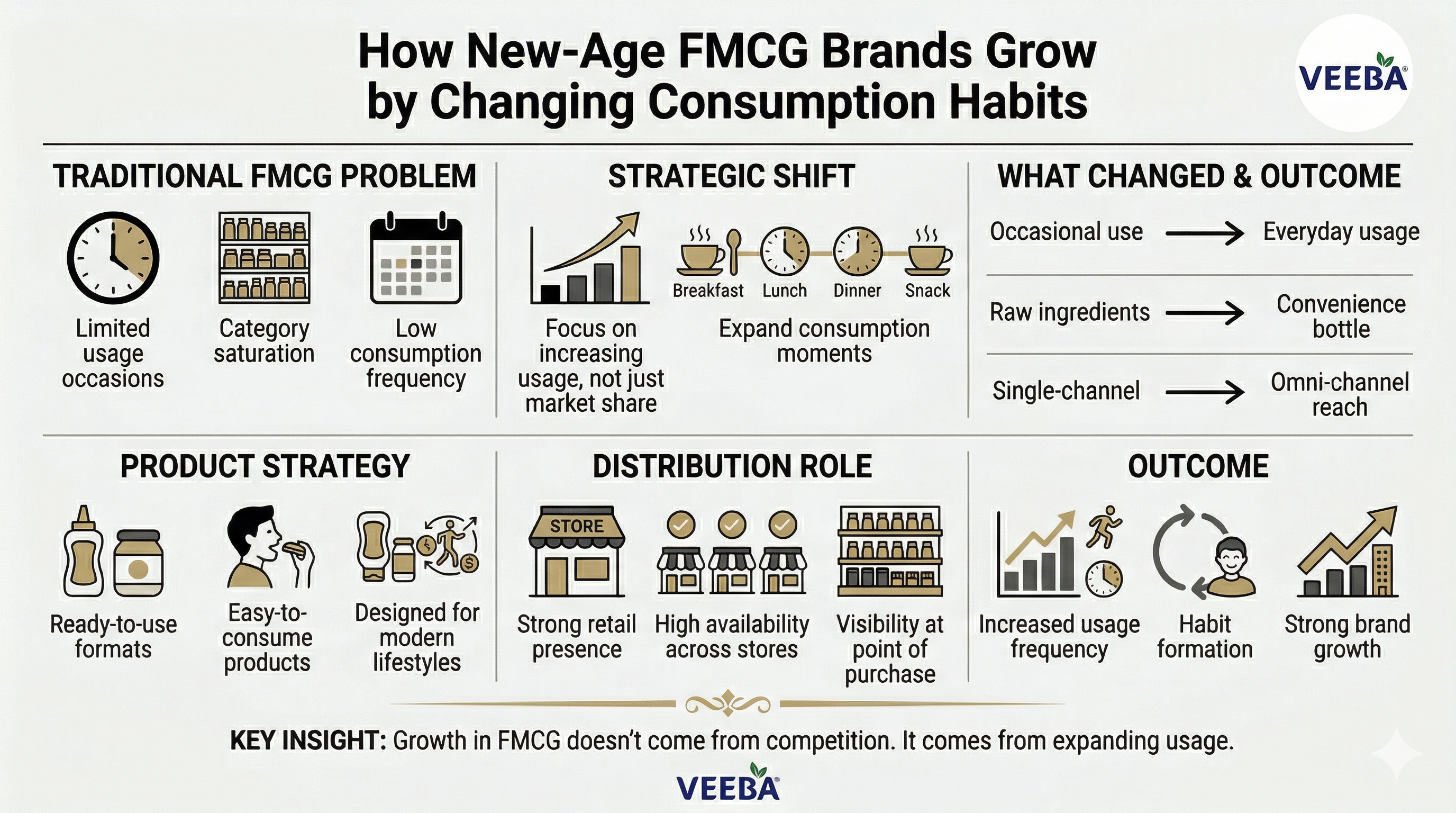
Instead of competing directly with ketchup brands, Veeba focused on:
Increasing usage occasions
It introduced products like:
- Pizza sauces
- Pasta sauces
- Burger spreads
- Sandwich spreads
Creating Everyday Consumption
Veeba positioned its products not as occasional add-ons, but as:
- Daily meal enhancers
- Quick cooking solutions
- Convenient home alternatives
This shifted consumer perception from:
“Optional product” → “Useful everyday item”
Product Strategy: Convenience First
Veeba aligned its offerings with modern lifestyles:
- Easy-to-use packaging
- Ready-to-use sauces
- Minimal preparation required
This made it attractive for:
- Students
- Working professionals
- Urban households.
Distribution + Visibility
While Veeba focused on category expansion, it didn’t ignore fundamentals.
It ensured:
- Strong retail presence
- Availability in modern trade and local stores
- Shelf visibility
Because even the best strategy fails without availability.
Brand Positioning
Veeba positioned itself as:
- Modern
- Youth-friendly
- Practical
Unlike traditional condiment brands, it focused on:
Lifestyle + convenience, not just product
Real Insight: Category Expansion > Competition
Veeba’s growth highlights a key FMCG principle:
The biggest growth doesn’t come from stealing customers.
It comes from:
Creating new habits
What Marketers Can Learn
- Growth is not always about market share
- Increasing usage frequency can unlock scale
- Convenience drives adoption
- Positioning shapes behavior
Conclusion
Veeba’s success shows that FMCG growth is not just about better marketing.
It’s about better understanding how consumers live.
By expanding usage occasions and aligning with modern lifestyles, Veeba moved beyond competition and built a strong position in a growing category.
The brands that win are not just better.
They are more relevant to everyday life.
FAQ
Veeba is known for sauces, spreads, and condiments that focus on convenience and modern consumption habits.
Veeba grew by expanding usage occasions and making its products part of everyday meals
The key strategy is category expansion—creating new consumption habits rather than competing directly
It increases frequency of use, which drives long-term growth and brand adoption